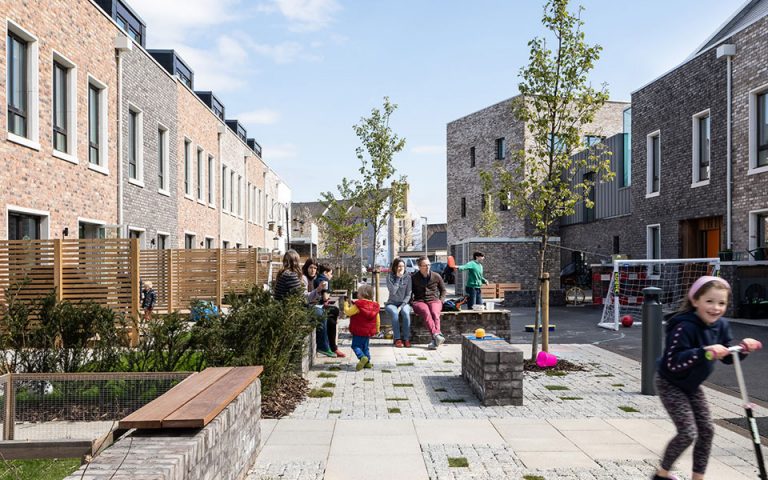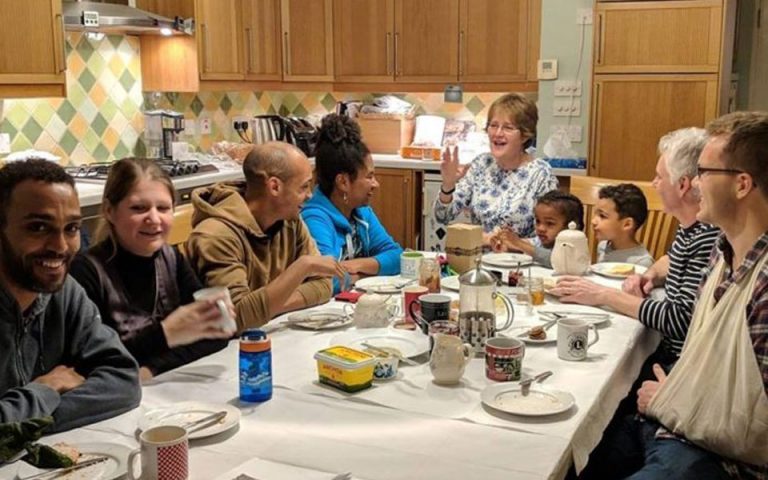
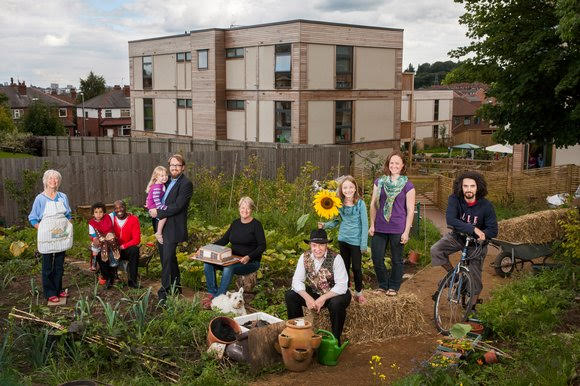

Cohousing is a way of living which brings individuals and families together in groups to share common aims and activities while also enjoying their own self-contained accommodation and personal space.
Cohousing communities are a means of compensating for the alienating effects of modern life where neighbours don't recognise each other and where day-to-day collaboration is minimal. They offer particular benefits for children in terms of secure play-space and shared activities with their peers. Older people can also find companionship and mutual support in such communities.
The main features of cohousing communities are:
There is a rapidly-growing UK interest in cohousing - take a look at our map of UK projects. There are an increasing number of groups seeking sites and many individuals seeking a group to join. There are four fully-established cohousing communities in the UK: Springhill in Stroud, the Community Project in Laughton, near Lewes, Thundercliffe Grange near Rotherham and Canon Frome in Wiltshire. Two smaller examples are the Threshold Centre in Dorset and The Courtyards near Bradford upon Avon. All are based on owner-occupation, although the Stroud community has three shared ownership units. It is difficult to pin down the exact number of groups as they are constantly in flux. We estimate there are 15 - 20 forming groups currently functioning, with another tier of up to 20 loose coalitions interested in cohousing.
To find out more and learn what this site can do for you, click here...The UK Cohousing Network website is a repository of information from many people. When reading an article, note whether it has an author beneath the title. If it does, that piece is the author's own views. This site hopes to encourage the sharing of as many viewpoints as possible so we can support each other in developing cohousing. But note that only un-named articles can be attributed to the UK Cohousing Network.

For rent from January to August 2009
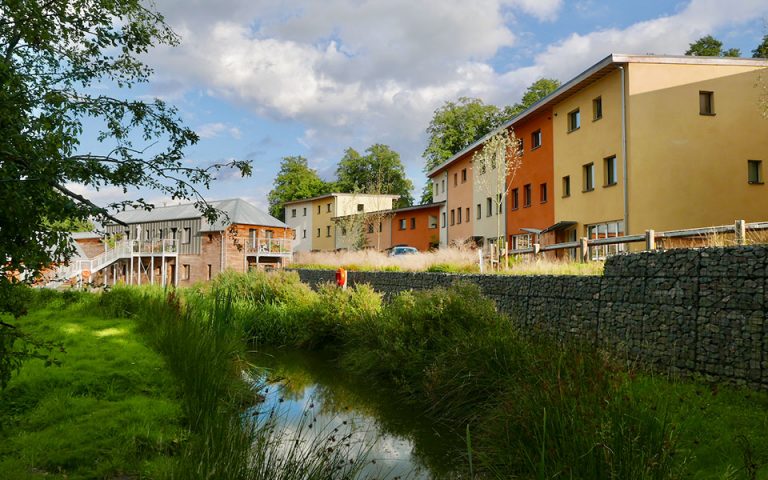
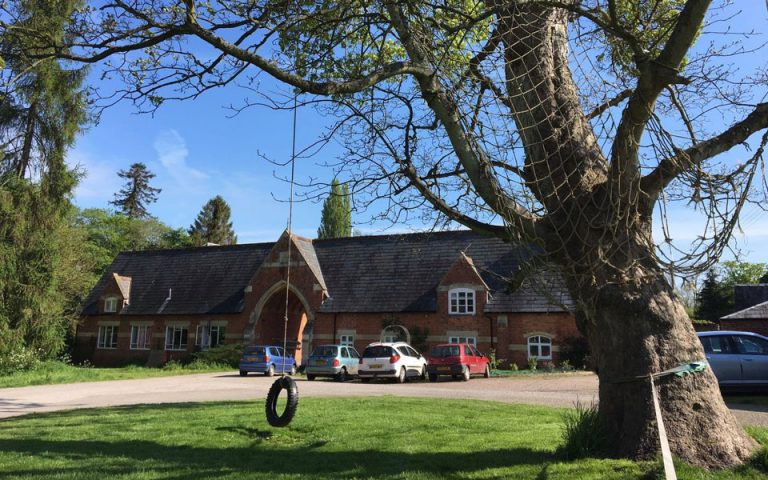
A four bedroom maisonette, part of a co-housing community in the greenbelt around the town of Bradford on Avon in Wiltshire at the southern end of the Cotswolds Area of Outstanding Natural Beauty. The Courtyards Community comprises five households around two open courtyards: one is to the north and the other to the south of number 83. The communal hall is used all year round for monthly meals, fortnightly meetings of the Courtyards directors, communal parties, private parties, a book club, monthly dance: The Wave (inspired by 'five rhythms'), ping-pong and games afternoons. The 8 acres of land are shared by residents. Many people grow their own food. There is a tree house, children's play area, bonfire area and tennis court. Also shared are the hot tub (wood-fuelled), sauna, and a non-heated, open-air swimming pool (built in 2006). With our neighbours at Frankleigh Co-Flats, we publish the regular newsletter, "Flip".
Bradford on Avon station is a 20-minute walk across the fields and connects to Bath Spa in 15 minutes, Bristol Temple Meads in 35 minutes, Weymouth in 1 hour 50 minutes. Bradford on Avon is a former mill-town nestling in the dramatic Avon valley. There is a weekly farmer's market and many good-quality restaurants and pubs. The Georgian Tea Room is well worth trying if you're visiting. The "Cottage Coop" wholefood, fair-trade café is nextdoor to Bishopston Trading (fair-trade clothes). There are a number of local artists. The Wiltshire Music Centre offers a full programme of classical, folk, world music and jazz and is a 20-minute walk across the fields. The annual music festivals at Trowbridge ("The Village Pump festival"), WOMAD, Glastonbury are within easy reach. For theatres, cinema and all the facilities of a big city, Bath is 7 miles away by car or bike.
There is a successful Steiner-based nursery, Hollyhocks. Bradford on Avon has two primary schools and one secondary school. Christchurch Primary School is 15-minutes' walk and offers an excellent and varied range of opportunities in music.

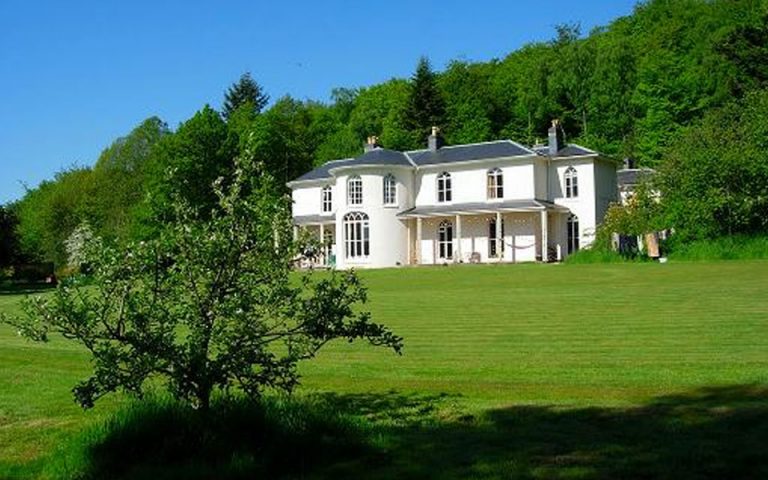
A four/five bedroom maisonette, part of a co-housing community in the village of Laughton in the heart of the South Downs. Laughton Lodge is on the edge of the village and the property has the advantage of sharing 23 acres of community land with the possibility of vegetable growing, (allotments and poly tunnel,) lounging in the wild flower meadow, joining the horse club, walking in the woods, playing in the tree house, camping or enjoying a full size football field.
There is a large community building with kitchen and dining room, large hall for parties, rehearsals, a music room, a games room, and potential office/studio space, for your own private use as well as communal use. Lots of communal activities for adults and children, shared childcare, car sharing possible.
The village has a primary school and the secondary school is three miles away. Steiner Schools and the Dharma school are twelve miles away. There are lots of social events in the village and there is a lively, well-stocked village shop, Post Office and Pub. Brighton twelve miles, London 53 miles, trains straight to London from Glynde (3 miles away) Lewes (5 miles) Uckfield (5 miles) Glyndbourne 2 miles, surrounded by South Downs walks from the front door through bluebell woods up to the hills.
The Threshold Centre is running more 'creating cohousing' workshops in June, September and November - for details, click here.
Brighton Cohousing are steaming on ahead; there's a Newsletter with the latest details, which you can access via Brighton Cohousing's news page.
Note especially the upcoming open meeting on Sunday 4th May from 2 - 5pm (venue to be confirmed - check the Brighton Cohousing website.)
You can contact Brighton Cohousing via their website.

For further details:
The UK Cohousing Network has a pile of cohousing books for sale, by Kathryn McCamant and Charles Durrett.
For full details, see our books for sale page. These are two fantastic books, and by buying from us you'll be doing a little bit to help keep the network going. The two books are:
For details on how to order, following the links to the book, above.
The project began with one couple who had a vision of a different type of lifestyle. They did some initial research and gradually became aware of a wide spectrum of existing communities. Some shared much more than others, the most "communal" pooling all of their income, working together and sharing meals. Some were very isolated, whereas in others the majority of members had full-time jobs outside their communities. They wrote to and visited communities which seemed closest to their own idea of fostering a closer and more co-operative way of living with other people, while retaining some personal privacy. Each visit helped to shape their ideas and one particular community closely resembled the format they were thinking of. However, they found nothing that exactly corresponded to their ideas, situated within commuting distance from London, a necessary location if they were to retain their careers. They shared their ideas with some friends and a small group of interested people formed. This group met for a year, honing the ideas and documenting them. Five members of this group live at Laughton Lodge today, but it took 6 years to get there!
We plan to create a cohousing community in West Yorkshire, for people who want a co-operative and self-responsible life style for their later years. Our community will support members to grow older together, to "age in place" safely and enjoyably. The community will include 12 - 20 homes with shared facilities such as a large dining room, recreation areas, laundry, workshops and gardens. There will be a strong emphasis on environmental sustainability.
We want to engage local people's interest and involvement in the LifeTime project, so that we remain part of the wider community. We will be a model of a supportive and accessible age-in-place community, encouraging other older people to consider such projects for themselves. We shall raise the profile of this kind of housing project with policy makers and service providers
Cohousing is a type of collaborative living that was first developed in Denmark during the 1970's. It combines the benefits of private space with the advantages of shared resources. Individual homes are clustered around a community building where members regularly socialise. The residents organise and participate in the planning and design process, and manage daily community business. Every member owns at least some share of the community's property
The LifeTime Community Project will provide individual homes for its members and a central shared space to meet, eat and enjoy life together. Our preference is to build from scratch but we will also consider renovating an existing building.
Each home will, as far as possible, reflect what its resident wants and can afford. There will be a range of affordable tenures - full ownership, part ownership, and homes for rent. The properties must be energy efficient and have low environmental impact.
When the need arises, we intend to buy in shared services such as cleaning, personal care and gardening.
We are a lively group of active retirees many of whom have known each other well for many years. At present, we live in different parts of the country but we see cohousing as an ideal way of maintaining our friendship and independence as we grow older. We have identified a site for a twelve unit cohousing scheme in a large West Somerset village and are in discussion with the trustees of the estate that owns the site with a view to entering into partnership with them to develop it.
Whilst having easy access to the local facilities and services the site is in an attractive rural location, and comprises a number of listed buildings and opportunities for new build. We envisage a development of one, two and three bedroom units and a range of shared facilities and open space.
Our vision is:
We are looking for others, not necessarily retirees, who share our vision to join us.
If you're interested and would like further details and an opportunity to meet us please contact Maggie or Tony via the link to their profile at the top of this story.